
Hearing aids built into glasses: Nuance Audio

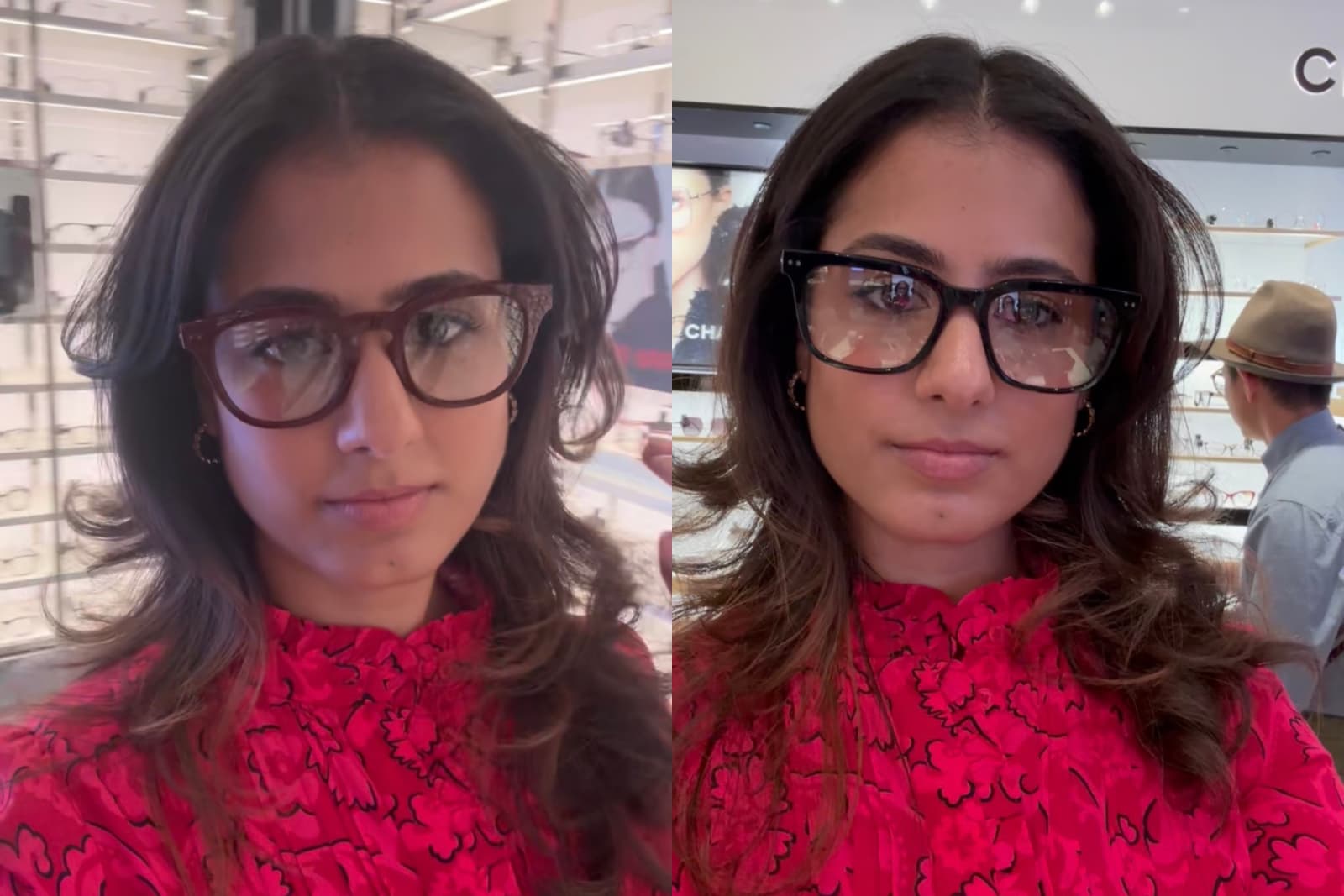
Hearing aid options for glasses wearers
There are several questions I receive almost daily at Dr Yovina Audiology. Many of them include, ‘will hearing aids affect how my glasses sit?’ or ‘can I have hearing aids that are built into the arm of my glasses?’. In truth, all modern hearing aids do sit comfortably next to a pair of glasses and, for a number of years now, ‘smart’ glasses, with hearing amplification built in, have been available to buy online.
These ‘smart’ glasses all sit around the £20 to £40 mark and are positioned as an alternative to the more expensive Meta Glasses. Hearing amplification is included but as a side benefit along with other features such as video recording and voice assistance, meaning that, until now, we have never had a truly successful option for dedicated hearing technology built into glasses.
What are Nuance Audio glasses?
The Nuance Audio glasses, developed by eyewear giant EssilorLuxottica, were first released in the UK in 2025 as the first hearing solution truly joining together the worlds of optometry and audiology. This innovative solution includes hearing technology fully integrated into the arm of a pair of glasses, making them a great option for anyone feeling apprehensive about the visual aspect of a pair of hearing aids.
An important distinction is that Nuance Audio is an over-the-counter (OTC) hearing solution rather than a prescribed hearing aid. This means it isn’t individually programmed and verified against your hearing loss in the same way that a professionally fitted hearing aid would be. Instead, Nuance Audio provides adjustable amplification alongside features designed to improve listening in different environments. Think of it similar to the effect of turning up the volume on your TV, but with some added benefits like background noise reduction.
How do Nuance Audio glasses work?
The hearing glasses themselves feature tiny speakers built into the arms of the glasses right above your ears, meaning there is nothing sitting within the ear. This means the glasses are purely providing you with an amplification boost, whilst keeping your ears open for natural sound and ventilation. This is particularly useful for anyone who doesn’t like, or feels uncomfortable, with the sensation of something in their ears. However, because the sound is delivered from speakers within the arms of the glasses rather than directly into the ear canal, the listening experience is different from a conventional hearing aid. This means that, in more complex environments, particularly where there are multiple competing speakers, you may still find that speech clarity is challenging.
What do you get with Nuance Audio glasses?
Nuance Audio glasses are available in two styles, the square and panthos (which is more circular). Each comes in three colours, shiny black, shiny burgundy, and deep blue. If you do require prescriptive lenses, they can also be fitted onto the hearing glasses. The glasses themselves come with a charging mat and a glasses case to keep them secure.
The Nuance Audio battery and charging
The Nuance Audio glasses have a battery that lasts for 8 hours with continuous use, and takes 3 hours to charge fully using the charging mat, which is included. For comparison, a rechargeable hearing aid will last a minimum of 24 hours with continuous use, and battery powered hearing aids will last days before needing a battery change.
So, if you’re looking for all day everyday use, Nuance Audio glasses are not for you. However, if you’re after a device that you can put on just when you need it, for example, for a few hours in the evening when you go to a restaurant, Nuance Audio glasses are ideal. In my experience, once Nuance Audio has provided a taste of what amplification can offer in key situations, users are often more ready to make the transition to the all day support offered by hearing aids.
The Nuance Audio app
The Nuance Audio app, designed to be used with the glasses, allows you to make adjustments to the volume and background noise reduction levels in real time. The glasses are designed to work best with the app so without it you do lose significant functionality. Nuance Audio themselves recommend that to have the best experience you should have your smartphone with you whilst wearing the glasses. This is so that you can adjust your settings based on your environment. This is an important consideration as, for many, adjusting the settings as you change environment would be inconvenient and may be forgotten. Hearing aids, in comparison, do all this automatically for you. They have environmental optimisers within them which allow the hearing aids to automatically adjust according to the acoustic environment you are in, which allows you to concentrate fully on your interactions.
Nuance Audio glasses also have a number of presets that are dependent on your type of hearing loss. Preset options are available for a flat mild hearing loss, a sloping mild hearing loss, a sloping moderate hearing loss, and a flat moderate hearing loss. Therefore, it’s important that you have a recent, professional hearing assessment and understand the configuration of your hearing loss, or to seek the support of an audiologist for this. Without this, you will encounter a lot of trial and error to determine which preset works best for you. Fortunately, because the hearing aid glasses are only recommended for someone with a mild to moderate hearing loss, you don’t run the risk of oversimplifying or damaging your hearing because of this.
As the Nuance Audio are amplifying according to presets as opposed to doing a lot of signal processing, the way a hearing aid does, I believe they would be helpful for things like watching TV or listening to music. For the same reason, because they amplify according to a preset rather than a unique audiogram, someone with an unusually shaped audiogram may not be a straightforward candidate for the glasses.
How much do Nuance Audio glasses cost?
In the UK, you can expect to pay anywhere between £700 and £1,000 for a pair of Nuance Audio glasses, depending on where you purchase them. If you require prescriptive lenses, they will be at an additional cost. They can be ordered directly from the Nuance Audio website, or if you would like to try them in person before purchasing, a store locator on their website is available to help you find the closest physical location.
So, how does the cost compare with professionally fitted hearing aids? Nuance Audio glasses are much cheaper, with professionally fitted hearing aids costing approximately £3,000 per pair. The reason being that the hearing aid glasses are not personalised to your unique hearing levels, so they don’t require professional fitting or maintenance in the same way. Hence, with prescribed hearing aids you are paying for the superior technology within them, and also the time and skill of the audiologist fitting them.
My (and my dad’s) experience with Nuance Audio
I was lucky enough to be invited to host the panel discussion at the launch for the Nuance Audio glasses in central London last year and was therefore able to try them for myself. Overall I was impressed, Nuance Audio glasses are stylish and provide a fantastic first step on the way to prescriptive hearing aids. Whether you don’t feel ready for hearing aids or you don’t like the way they look, something is better than nothing. The Nuance Audio glasses are a great option for that ‘something’.
Watch me at the launch event for Nuance Audio glasses in central London
The glasses are comfortable and, compared to other OTC and hearing aids, the Nuance Audio are unique as there is nothing physically going into the ear. This makes them a good option for people with sensory issues or sensitivity. When I had the opportunity to listen to the glasses and play around with the various settings, the sound quality was good and I could tell a difference between the presets.
In terms of remembering to change the settings throughout the day, personally, I think I would find this an inconvenience and would be unlikely to change them to get the most benefit from the glasses. However, this is likely personal. My dad has a mild hearing loss and happily used the glasses for a while before taking the next step to a pair of hearing aids. My dad quite likes technology, and he would regularly change the settings according to his environment, particularly feeling the benefit in one to one conversation.
Finally, given my lifestyle, interacting all day at work and with family and friends in the evening, the relatively short battery life would be an issue for me. Likewise, even with a very different lifestyle, my dad quickly transitioned to hearing aids because he wanted the all day hearing support they provide.
Watch my dad’s review of Nuance Audio glasses vs. his hearing aids
In summary, having had personal experience with the Nuance Audio glasses, I can recommend them as a good OTC option for anyone with a mild to moderate hearing loss. If you don’t feel ready for prescriptive hearing aids, or would like to get a feel of what amplification might be like, they are stylish, comfortable, and safe to use. Nuance Audio glasses provide a great midpoint between having a prescribed pair of hearing aids compared to struggling with nothing at all, which is sadly what many people end up doing. For the best experience I would recommend trying them in store.
If you are struggling to hear or have noticed a change in your hearing, I would always recommend a professional hearing test in the first instance. An audiologist can explain the nature and severity of any hearing loss, and rule out wax or any other hearing conditions that may warrant further investigation.
Nuance Audio are releasing their next generation of the glasses later this month in Milan, so watch this space for my updated review.
By Dr Yovina Khiroya-Morjaria
Dr Yovina Khiroya-Morjaria is a highly skilled and experienced audiologist and is director of Dr Yovina Audiology. Internationally trained, she holds a BSc. (Hons) in Healthcare Science Audiology from De Montfort University, a MSc. in Clinical Audiology from University of Melbourne, and a Doctorate in Audiology (AuD) from Nova Southeastern University. Learn more about Dr Yovina.